
Smooth paint on steel is safe. It’s even, clean and predictable – and that’s exactly the problem. A perfectly flat coat makes a handmade sculpture look like it came out of a factory. For the three newest torsos from my workshop I went the other way: every one of them is finished with a crackle patina, a layered paint that breaks into a fine web of cracks as it dries.
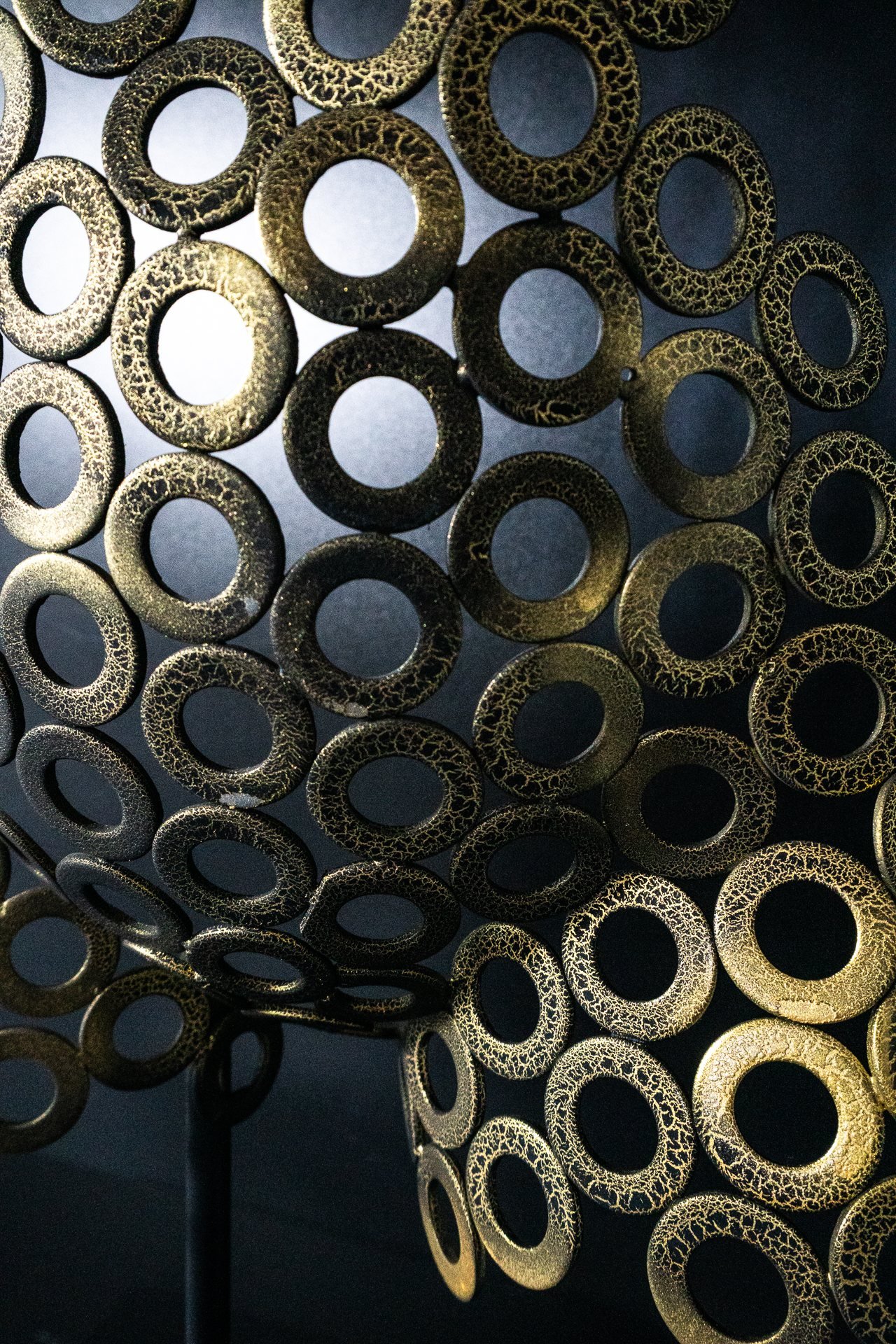
What a crackle patina actually is
The finish is built in two layers. First a base colour goes on – gold, turquoise or lime. Then a contrasting top coat is applied over it. As the top layer dries, it shrinks and splits, opening hairline cracks through which the base colour shows. The result looks like old enamel, weathered bronze or paint that has lived through a hundred summers.
The cracks can’t be fully controlled. Thickness, temperature and the curve of each ring decide where they open and how wide they get. That’s why no two pieces ever look the same – even when I use the same colours on the same form.
Why patina beats smooth paint
- Depth. Two colours sit on top of each other, so the surface reads differently from every distance. From across the room you see one tone; up close you discover a second one hiding underneath.
- Light. Smooth paint reflects light in one flat sheet. Cracked paint breaks it up, so the sculpture glows rather than shines.
- Age and story. Patina makes a brand-new piece look as if it had a past. Steel already carries an industrial history – the crackle finish leans into it instead of hiding it.
- Forgiving. Small marks and fingerprints disappear into the texture. A glossy finish shows every speck of dust.
Not only for lofts: crackle in rustic interiors
Steel sculpture is usually filed under “industrial” or “modern minimalist”. A smooth-painted piece really does belong there – it needs concrete, glass and clean lines around it. A crackle patina changes that. The aged, slightly worn surface sits just as comfortably next to reclaimed wood, stone walls, linen and old furniture. Think farmhouse kitchen, mountain cabin or a living room with exposed beams: the sculpture stops looking like a modern intruder and starts looking like something that has always been there.
In practice the rule is simple. Warm finishes like gold under black work best with wood and earthy tones. Cooler or brighter ones – turquoise, lime – add a strong accent to a neutral, rustic room without fighting it.
Three new torsos, three crackle finishes
Golden Venus – black patina over gold
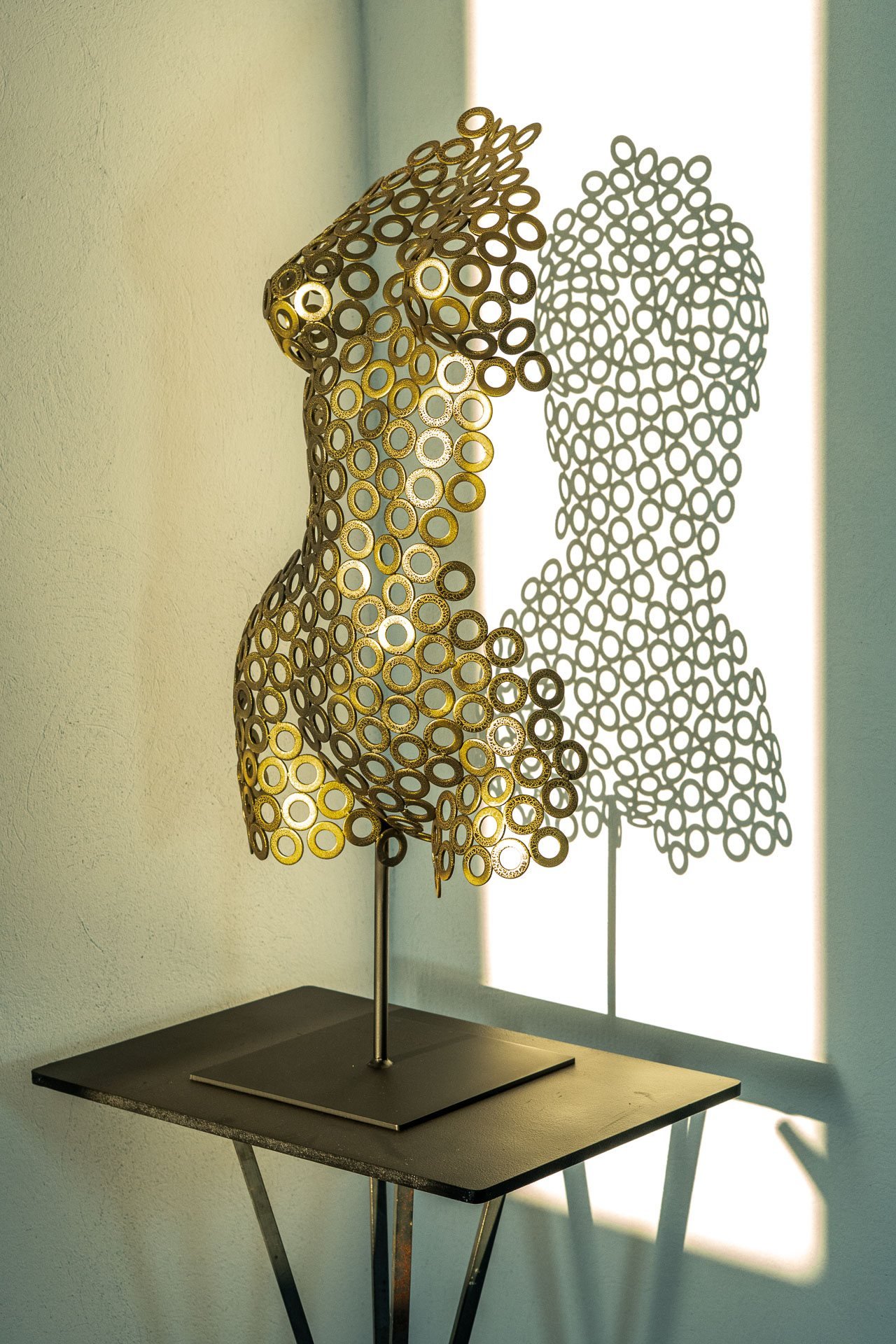
Hundreds of flat steel rings welded into a female torso. The gold base glows through a black crackle, so every ring looks like a piece of excavated jewellery. The warmest of the three and the most at home in a rustic or classic interior. See Golden Venus.
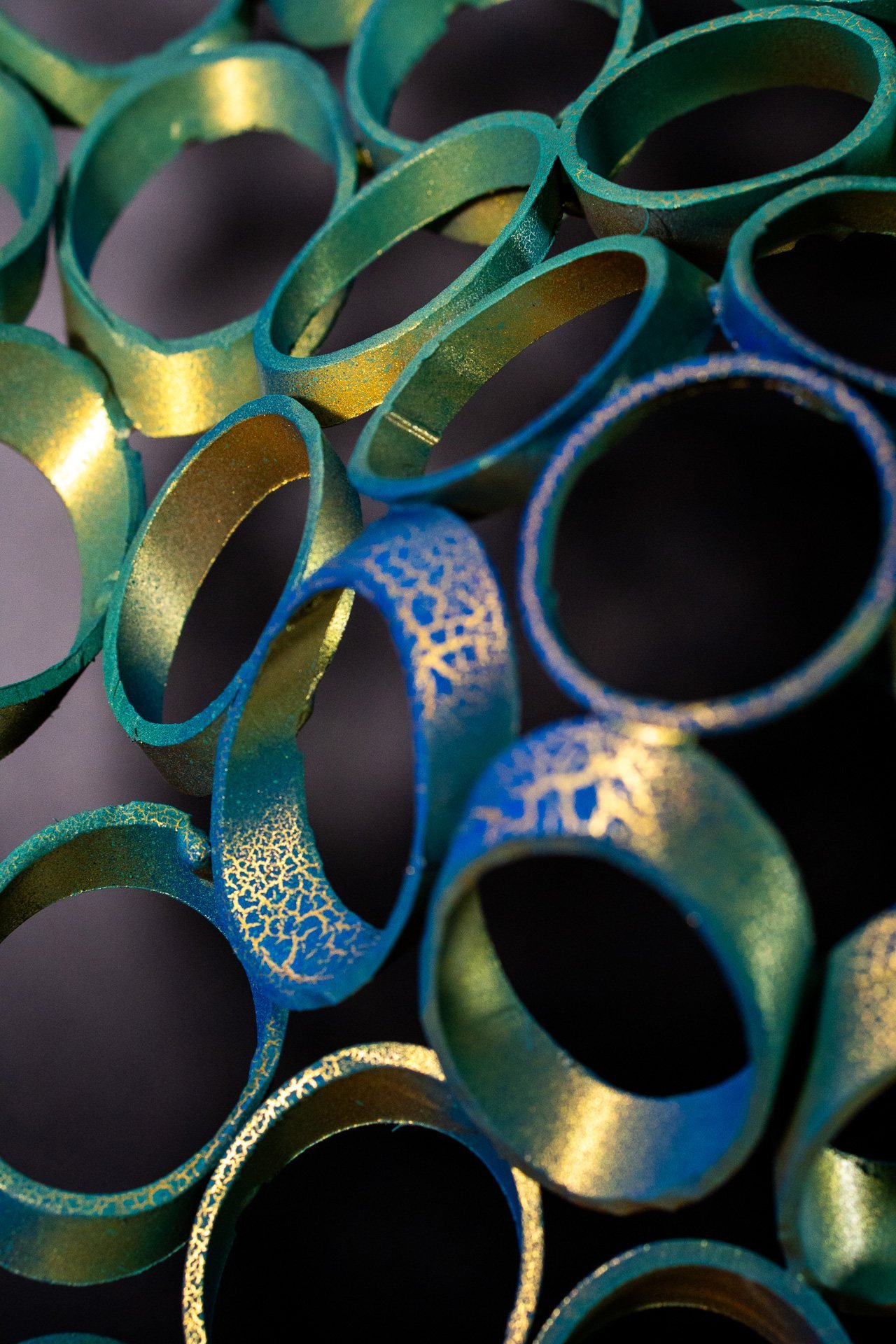
Ocean Venus – gold crackle over turquoise
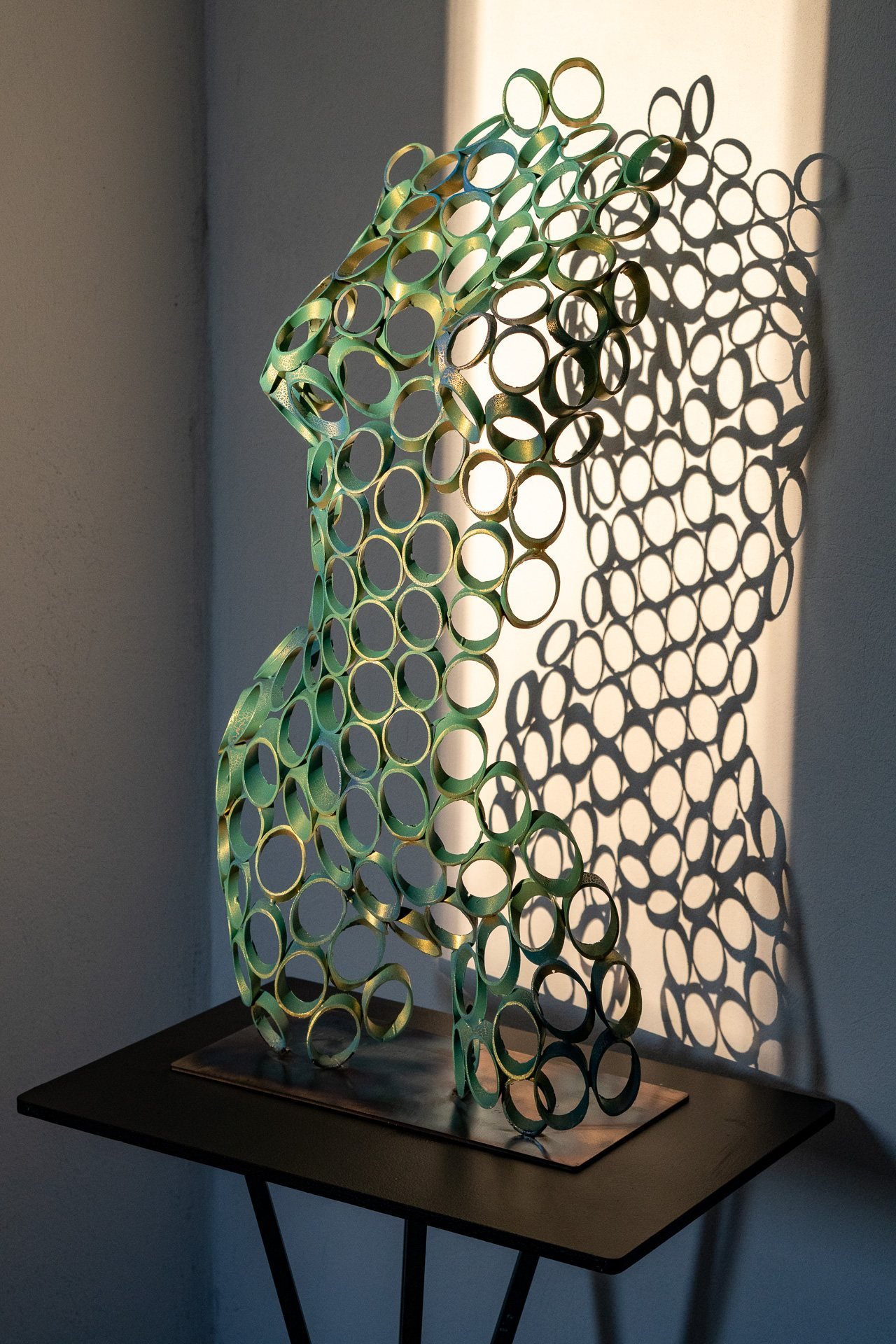
Here the order is reversed: gold cracks over a turquoise and blue base. The torso is built from slices of steel tube cut at different angles, so it changes as you walk around it and throws a wall of oval shadows. See Ocean Venus.
Pixel Venus – black crackle over lime
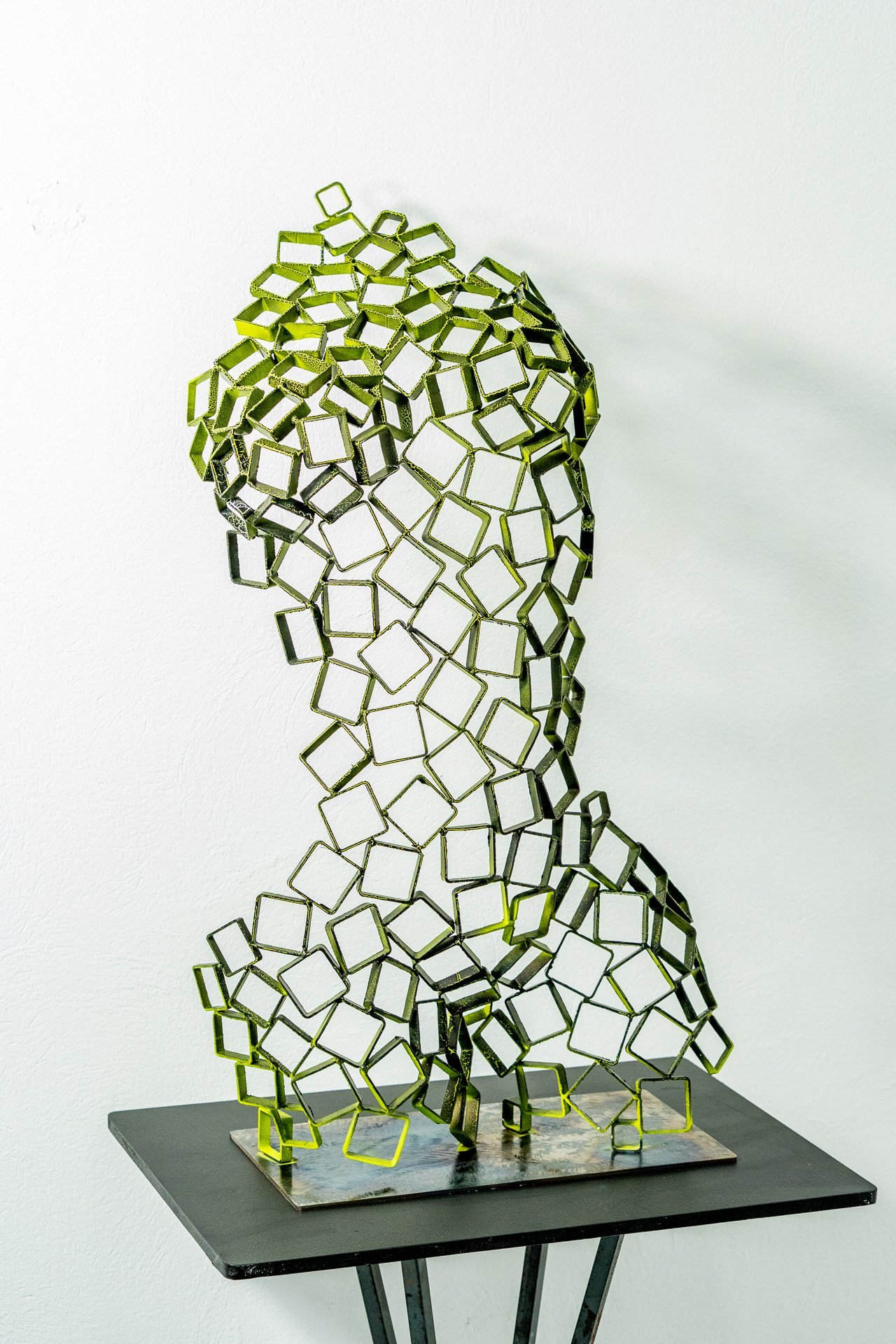
The boldest of the three. Square steel tube turns the soft curves of a torso into geometry, and the lime base flashes through the black crackle along every edge. Electric in daylight, graphic in the evening. See Pixel Venus.
Caring for a crackle finish
The patina is sealed with a clear lacquer as the outermost layer, and the sculptures are made for indoor use. Strong sunlight is the one thing to keep in mind: UV slowly affects acrylic lacquers, so a spot away from direct, all-day sun keeps the colours fresh for longer. For cleaning, the best tools are compressed air or an electrostatic duster – they lift dust out of the cracks and from between the rings without touching the surface. No water, no cleaning sprays.
Your colour, your patina
All three sculptures are ready to ship, and each can be made again to order in about three weeks. If you’d like a different pair of colours – copper under black, red under gold, anything that matches your room – I’m happy to make a custom piece. You can also see how the same torso form looks in other finishes in the Venus Series, or browse all steel sculptures.